

In the ever-evolving landscape of digital marketing, "calculator funnels" have emerged as a potent strategy for capturing and converting leads. These interactive tools, often disguised as simple online calculators, serve as highly effective lead magnets. By offering a free result initially, they engage visitors who are already providing data, thus qualifying themselves as potential customers.
Consider this: a visitor who actively inputs data into a calculator is already demonstrating interest and engagement with the content. This interaction, known as a micro conversion, lays the groundwork for future sales opportunities. Following the initial calculation, users are often offered a more detailed paid report. This freemium approach not only increases conversion rates but also leverages email capture for follow-up marketing efforts.
Calculator funnels also excel in niche SEO and programmatic pages, drawing in specific audience segments and broadening reach. For businesses seeking to optimize their lead generation strategies, these funnels offer a structured path from free engagement to paid services. By blending valuable interactive content with strategic follow-up emails, they transform casual visitors into loyal customers.
Why Calculators Convert Better Than Static Content
Calculators serve as a powerful lead magnet in digital marketing strategies, particularly through the use of calculator funnels. Unlike static content, a calculator provides answers to personal and specific questions, aligning perfectly with high search intent. When users visit a website armed with a particular query, an interactive tool like a calculator can directly address their needs, offering immediate and relevant solutions. This precise alignment with search intent significantly enhances the conversion rate.
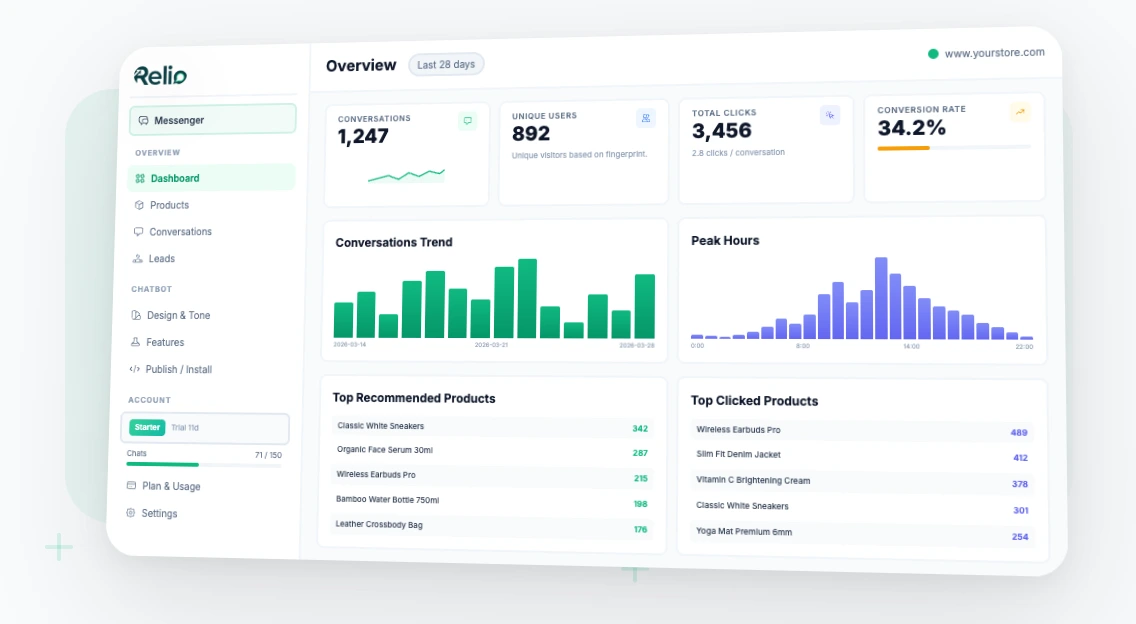
Understand exactly how your AI assistant performs with comprehensive analytics. Track every metric that matters — from conversations to conversions.
- Conversations & unique visitors
- Top products & click rates
- Revenue attribution tracking
Interactive content such as calculators also excels in engaging users more effectively than traditional articles. As visitors engage with these tools, they tend to spend more time on the page. This extended engagement is crucial because it not only reflects interest but also increases the likelihood of return visits. The interactive nature keeps users absorbed, prompting them to explore further, potentially leading to deeper interactions with other site features. For more insights into user engagement, visit our blog on AI chatbots.
Each completed calculation within a calculator funnel acts as a micro conversion. These micro conversions are vital indicators of purchase readiness. They not only provide businesses with valuable data points about user preferences but also signal where a user is in the purchase journey. This information can be leveraged to tailor follow-up communications, potentially through email capture, to nurture leads further down the sales funnel.
Calculator funnels often offer a freemium model, where basic calculations are free, but detailed reports or premium features require payment. This freemium approach allows users to experience the value of the tool first-hand, increasing the likelihood of transitioning into paid reports or services. Such a model is effective in converting users who are initially hesitant but become more inclined to purchase after seeing the calculator's benefits in action.
- Calculators address specific user queries, enhancing conversion rates.
- Interactive tools like calculators increase time spent on the page and encourage return visits.
- Micro conversions during calculations indicate user readiness to purchase.
- Freemium models in calculators can lead to paid conversions.
Incorporating calculators within marketing strategies not only improves engagement but also enhances conversion metrics. As businesses continue to explore innovative approaches to capture and nurture leads, the role of interactive content like calculators is becoming increasingly indispensable. For more information on integrating such tools, visit our integrations page.
The Anatomy of a Calculator Funnel
Calculator funnels are a strategic blend of freemium tools and paid reports, designed to guide users through a seamless journey from free access to premium content. Understanding the anatomy of a calculator funnel is crucial for maximizing conversion rates and leveraging niche SEO.
Step 1: Ranking with Long-Tail Keywords
The journey begins with a free calculator designed to rank well on long-tail keywords with weak competition. These keywords are specific and less competitive, making it easier to achieve visibility in search engine results. By focusing on niche SEO, calculators can attract targeted traffic interested in specific queries. This strategic approach helps in driving organic traffic to the calculator page, which serves as the entry point of the funnel.
Step 2: Teasing the Deeper Insights
Once users engage with the calculator, they are greeted with a result screen that offers immediate value. However, the true power of the funnel lies in the next step. On this screen, users are teased with the promise of a deeper personalized report available behind a small one-time payment. This upsell strategy is designed to convert users who find initial value in the free tool into paying customers. These paid reports offer users detailed insights, increasing the likelihood of conversion.
Step 3: Capturing Emails for Follow-Ups
Email capture is an integral component of the funnel. By collecting emails, businesses can power recovery and follow-up sequences for visitors who leave without making a purchase. This strategy is crucial for maintaining engagement and encouraging conversions over time. Effective email capture ensures visitors remain within reach, allowing for personalized follow-ups that can reignite their interest in the digital products offered.
Below is a concise breakdown of the calculator funnel process:
- Step 1: Rank the free calculator using niche SEO to attract targeted traffic.
- Step 2: Offer a deeper report for a one-time payment as an upsell on the result screen.
- Step 3: Capture emails to enable recovery and follow-up sequences for non-converted visitors.
The combination of programmatic pages, effective email capture, and strategic upsells creates a powerful funnel that drives both initial interaction and subsequent conversions. For more information on how such strategies can enhance e-commerce conversions, explore this article.
Case Study: 75 Calculators Feeding Paid Reports
In the diverse landscape of digital products, Estimez.ro stands as a remarkable example of scaling a calculator funnel in a non-English market. Operating in Romania, Estimez.ro offers over 75 free calculators, including tools for pensions, taxes, and salaries. These calculators cater to a wide range of user intents, providing essential services that attract significant engagement time.
Among its offerings, the pension calculator is the most popular. It allows users to compute their retirement estimates for free. However, the platform goes beyond free calculations by offering a paid layer that includes personalized PDF reports and legal document generators. For a small fee comparable to the price of a coffee, users receive a detailed multi-page report with an action plan tailored to their specific needs.
This model exemplifies how one niche site can host many small tools effectively. The free calculators are supported financially by the paid layer, demonstrating a balanced ecosystem where the payment wall enables broader service provision. To maximize conversions, Estimez.ro utilizes programmatic pages for niche SEO, ensuring the calculators reach the right audience. Additionally, the platform employs upsells and abandonment emails to recover visitors who leave before completing a purchase, further enhancing its revenue stream.
Lessons from Estimez.ro reveal that understanding user intent and strategically placing upsells can significantly enhance engagement. The free layer draws users in, while the paid offerings ensure sustainability. This dual-layer approach not only funds the free calculators but also provides users with deeper insights through personalized reports.
For businesses exploring similar models, integrating these strategies with platforms like Relio's features can streamline operations. With integrations that support seamless user experiences, the potential for success increases. Exploring the features of such platforms can provide further insights into building a robust calculator funnel.
In conclusion, Estimez.ro's success underscores the viability of calculator funnels as a business model. By combining free and paid digital products, and leveraging SEO and user engagement tactics, niche sites can thrive in competitive markets.
Adding Chat to an Interactive Funnel
Integrating a chat assistant into an interactive funnel can significantly enhance the user experience and increase conversions. A chat assistant acts as a guide, directing visitors to the most relevant tools and addressing any follow-up questions they might have. This real-time interaction is crucial for understanding user intent and ensuring that visitors find what they need quickly, reducing their likelihood of abandoning the site.
Conversational lead capture is an effective complement to the existing email gate, especially at the paid step of the funnel. While traditional methods like email gates capture potential leads, chat assistants can engage visitors in a conversation to gather even more personalized data. This approach can provide insights that go beyond basic email collection, offering a deeper understanding of user preferences and increasing the chances of converting a one-time purchase into a higher average order value. More about these features can be found here.
Recovering visitors who are about to leave the funnel can be challenging. Chat prompts are an effective tool for engaging such visitors before they exit. Unlike abandonment emails that rely on follow-up actions, chat prompts can engage users in real-time, addressing concerns or queries that might be causing hesitation. This method can lead to longer engagement times, which is crucial for nurturing organic traffic and improving conversion rates.
Furthermore, chat assistants can enhance the overall user journey by offering personalized PDFs or other resources that cater to the specific needs of the visitor. This personalized touch can make the difference between a lost lead and a successful conversion. The interaction does not end at the payment wall; it continues to foster engagement and build trust with the customer.
In conclusion, adding chat to an interactive funnel is not just about capturing leads; it is about creating a seamless experience that guides visitors through the funnel efficiently. By utilizing chat assistants, businesses can better understand user intent and tailor their strategies to meet customer needs, ultimately leading to increased satisfaction and higher conversion rates.
How to Build a Calculator Funnel Step by Step
Creating a successful calculator funnel involves strategic planning and execution. The journey begins with selecting the right question that not only has a clear numeric output but also real search volume. This ensures that the calculator meets genuine user needs while attracting organic traffic to the platform.
The initial step is to identify a question that resonates with the target audience. This could be anything from calculating savings from using a specific product to determining the ideal loan amount. The key is to ensure the question can be answered with clear numeric output. This specificity helps in attracting users who are searching for precise solutions. For more insights into how AI can boost ecommerce conversions, explore our related article.
Once the question is selected, the focus shifts to developing and launching a free tool. This tool should be simple and user-friendly, allowing users to easily input data and receive results. The primary aim at this stage is to gather data on how users interact with the tool. Measuring usage metrics is crucial, as it provides insights into user engagement and helps identify potential areas for improvement. Following this, design the paid layer, such as a personalized PDF report or additional features, to enhance user experience.
Instrumentation is a critical component of building an effective calculator funnel. Implementing event tracking allows for comprehensive analysis of user interactions. Important events to track include tool completion, teaser views, checkout processes, and purchases. This data is invaluable for understanding user behavior and optimizing the funnel for improved conversion rates. A well-instrumented funnel can significantly enhance the average order value by converting free tool users into paying customers through a one-time purchase option.
Building a calculator funnel is a dynamic process that involves continuous learning and adaptation. By focusing on these core steps, businesses can develop a tool that not only meets user needs but also drives growth through increased engagement and sales. For information on the costs associated with implementing AI in sales, visit our cost comparison guide.
- Pick a question with clear numeric output and real search volume
- Ship the free tool first, measure usage, then design the paid layer
- Instrument everything: events for tool completion, teaser views, checkout, purchase
Conclusion
Calculator funnels effectively engage audiences by offering immediate, tailored answers. This exchange builds trust and captures attention. The strategy lies in providing a straightforward solution that leads to deeper, personalized insights. This approach not only satisfies initial curiosity but also opens opportunities for offering detailed reports, guidance, and documents that address specific needs. To harness the power of calculator funnels, identify a recurring question from customers. Transform this query into an interactive tool that provides instant, meaningful feedback. This will not only draw users in but also encourage them to explore more comprehensive options. Implementing this strategy can create a lasting connection with audiences while meeting their immediate and long-term needs.
Frequently Asked Questions
A calculator funnel is a type of lead generation tool that provides potential customers with a personalized calculation based on their specific inputs. This process helps engage users by offering them value upfront and can guide them towards making informed purchasing decisions.
Calculator funnels can increase user engagement and conversion rates by providing personalized experiences. By offering tailored insights, they help build trust with potential customers and encourage them to share their contact information for further follow-up.
Industries such as finance, real estate, and health and wellness often use calculator funnels to engage potential clients. These tools are particularly effective in any sector where personalized information or estimates can enhance the decision-making process.
Calculator funnels gather specific data from users, allowing businesses to segment and qualify leads more effectively. This targeted information ensures that sales teams can focus on high-quality leads that are more likely to convert.
Common inputs might include financial figures, personal preferences, or demographic information. For instance, a mortgage calculator may ask for loan amount, interest rate, and loan term to provide an estimated monthly payment.