Relio is an AI chat widget that recommends products from the real catalog, boosting conversions. Perfect for e-commerce stores.
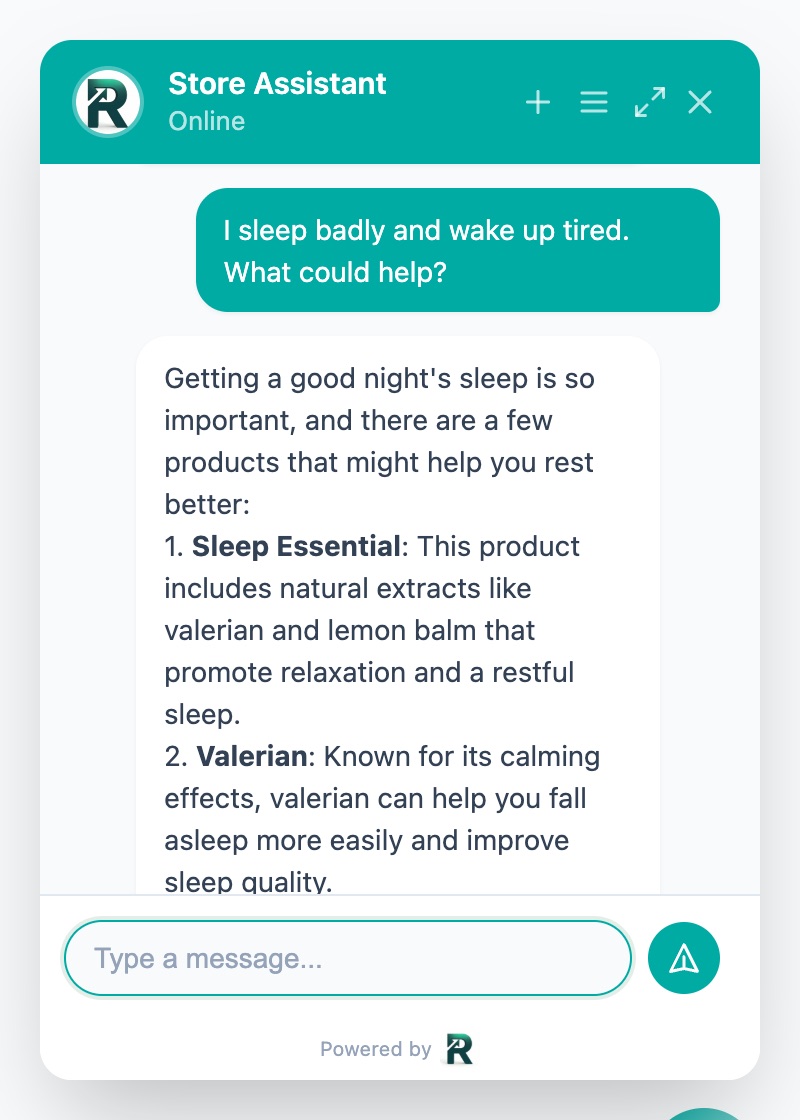
When deciding between Relio and Tidio, consider what you want to achieve for your store. Relio focuses on driving sales through targeted product recommendations. It functions as an AI chat widget that learns your catalog in just 60 seconds and suggests the best products based on customer inquiries. For example, a visitor asking for a “gift for a coffee lover” will get relevant product suggestions from your inventory.
On the other hand, Tidio focuses heavily on customer support capabilities. Features include a multichannel inbox and ticketing system, allowing you to manage customer inquiries from various platforms in one place. This can be beneficial if your primary goal is to enhance customer service and simplifies communication.
To make the right choice, assess whether your store needs more reliable sales or enhanced customer support. Consider how each tool integrates with your current systems:
By aligning your choice with your store's primary goal, you can tap into the benefits that most meet your specific needs.
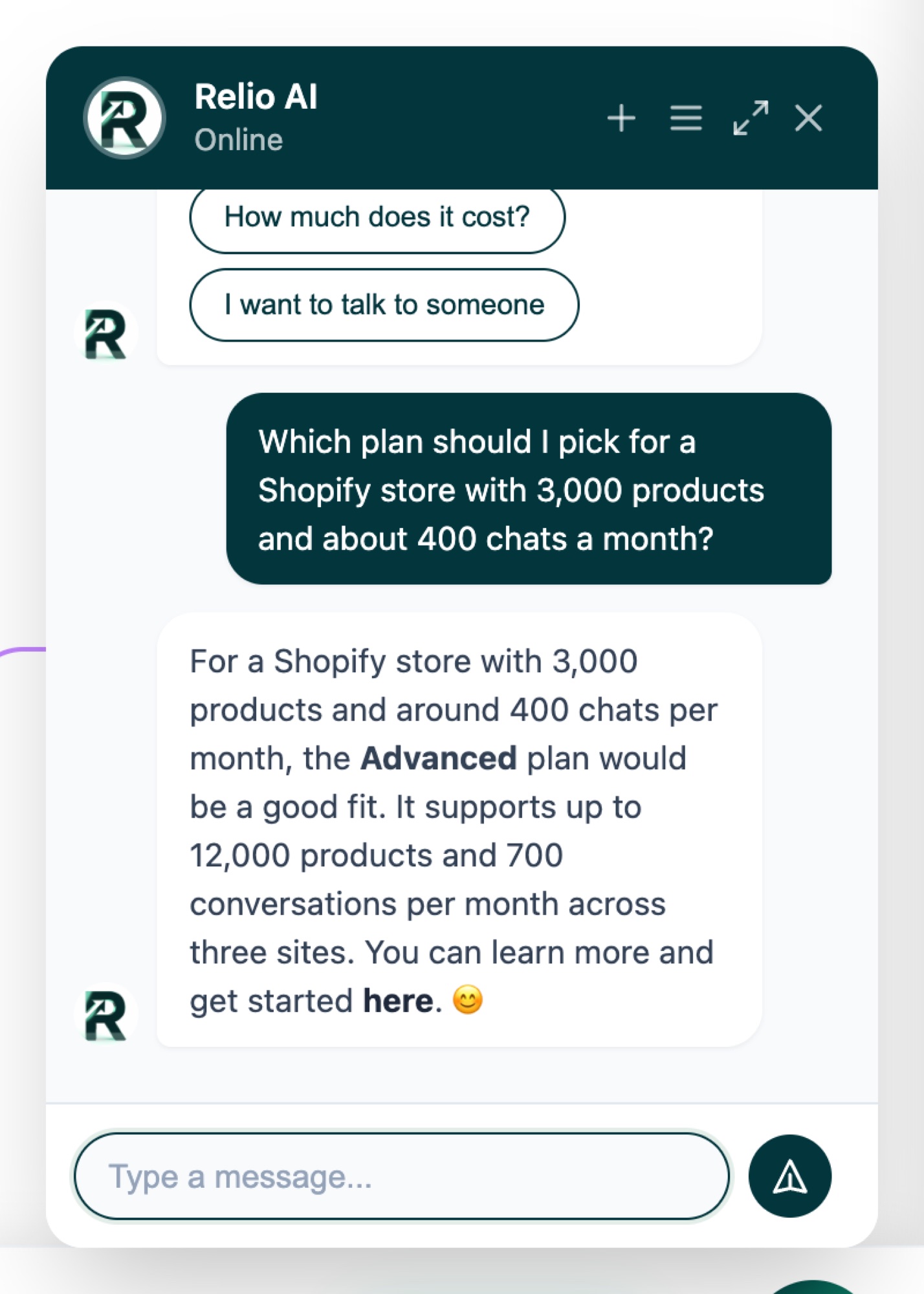
When comparing the pricing models of Relio and Tidio, it’s important to align them with your store’s needs. Relio offers flat monthly rates, starting at $19/month, which means you can predict your expenses without worrying about usage spikes. There are no per-message or per-conversation fees, allowing you to budget more effectively.
In contrast, Tidio uses a usage-based pricing model. This can lead to additional costs particularly if you require advanced AI features or experience high chat volumes. It’s crucial to consider whether these variable costs align with your store's budget and expected chat traffic.
Both Relio and Tidio offer a Free plan, though with certain feature limitations. Relio’s Free plan supports 500 products and 20 conversations per month; a solid starting point if you're testing waters. Assess whether these limits align with your current store activity.
To decide which pricing model fits better, think about your store's typical chat volume and whether predictability or flexibility is more important to your budgeting strategy. If your store has steady traffic, Relio’s flat rate could be advantageous. For fluctuating volumes, Tidio’s variable costs might require closer monitoring.
Relio stands out by directly recommending products from your catalog using advanced AI-driven insights. When a customer types "I need a birthday gift for my sister," Relio suggests specific items from your store's inventory, enhancing the shopping experience.
Tidio, while offering AI features through its Lyro system, focuses more on support conversations rather than direct product recommendations. This means that Tidio may not be as effective in driving sales through precise AI suggestions.
Relio's unique Owner Bias feature lets you prioritize certain products in recommendations. This can be particularly useful if you need to move seasonal stock or promote higher-margin items.
Both tools have different strengths. Consider how they handle upselling or cross-selling. With Relio's product focus, your store could see increased conversions and targeted selling opportunities.
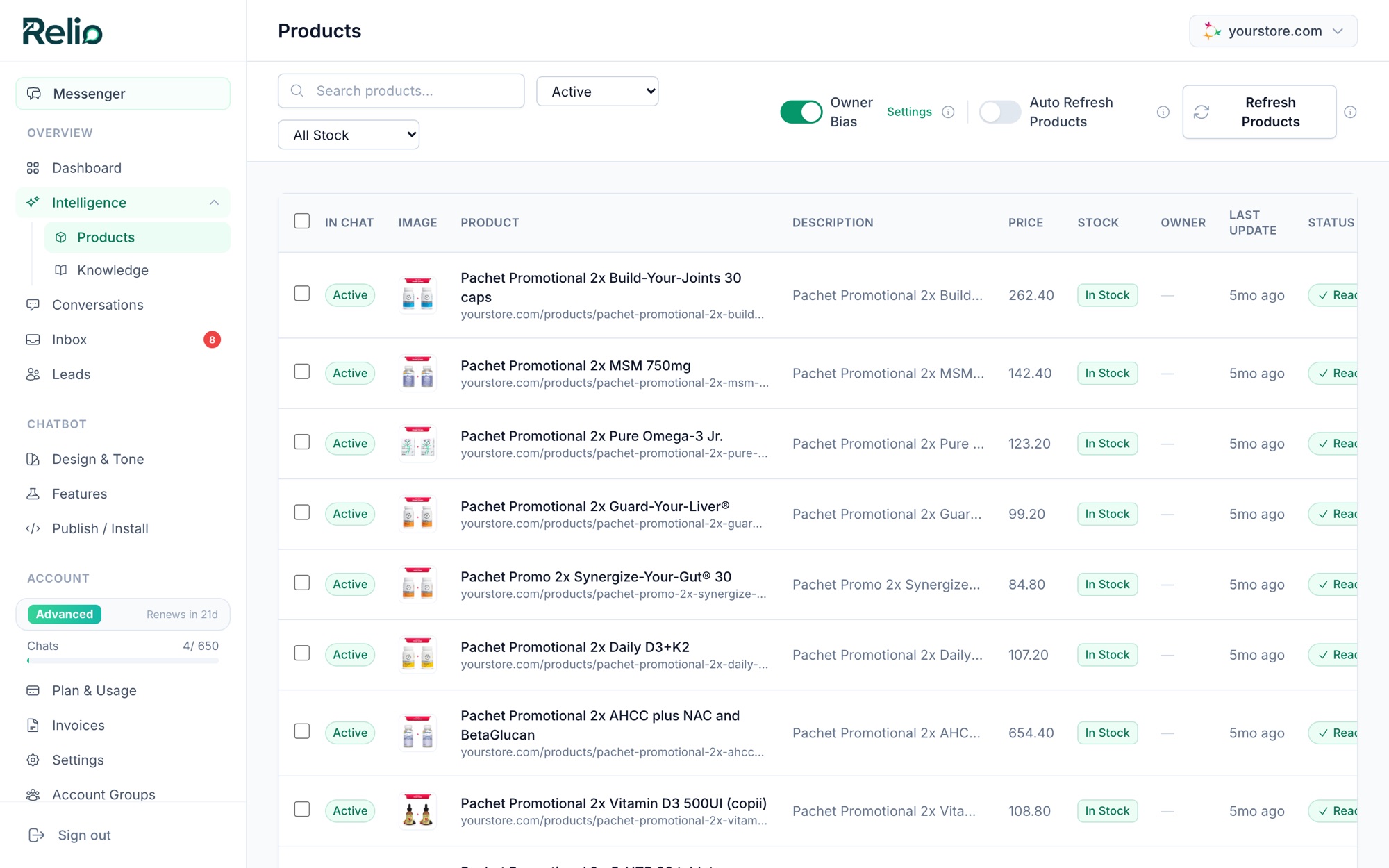
Both Relio and Tidio offer live chat capabilities, allowing you to interact with customers in real-time. With Relio, the chat widget automatically takes care of routine inquiries. When a conversation requires human involvement, such as handling complex issues or custom orders, Relio transfers the chat smoothly to a live agent. You receive instant notifications, ensuring no customer is left waiting.
Here's an example: A customer asks for a personalized gift. Relio handles initial questions, but when specifics like custom engravings come up, the chat is handed over to you or your team for detailed assistance.
Tidio offers multichannel conversations through a unified inbox. This lets you manage interactions from different platforms in one place. It's useful for centralized communication, but consider whether channel-specific handoffs could simplifies your customer experience.
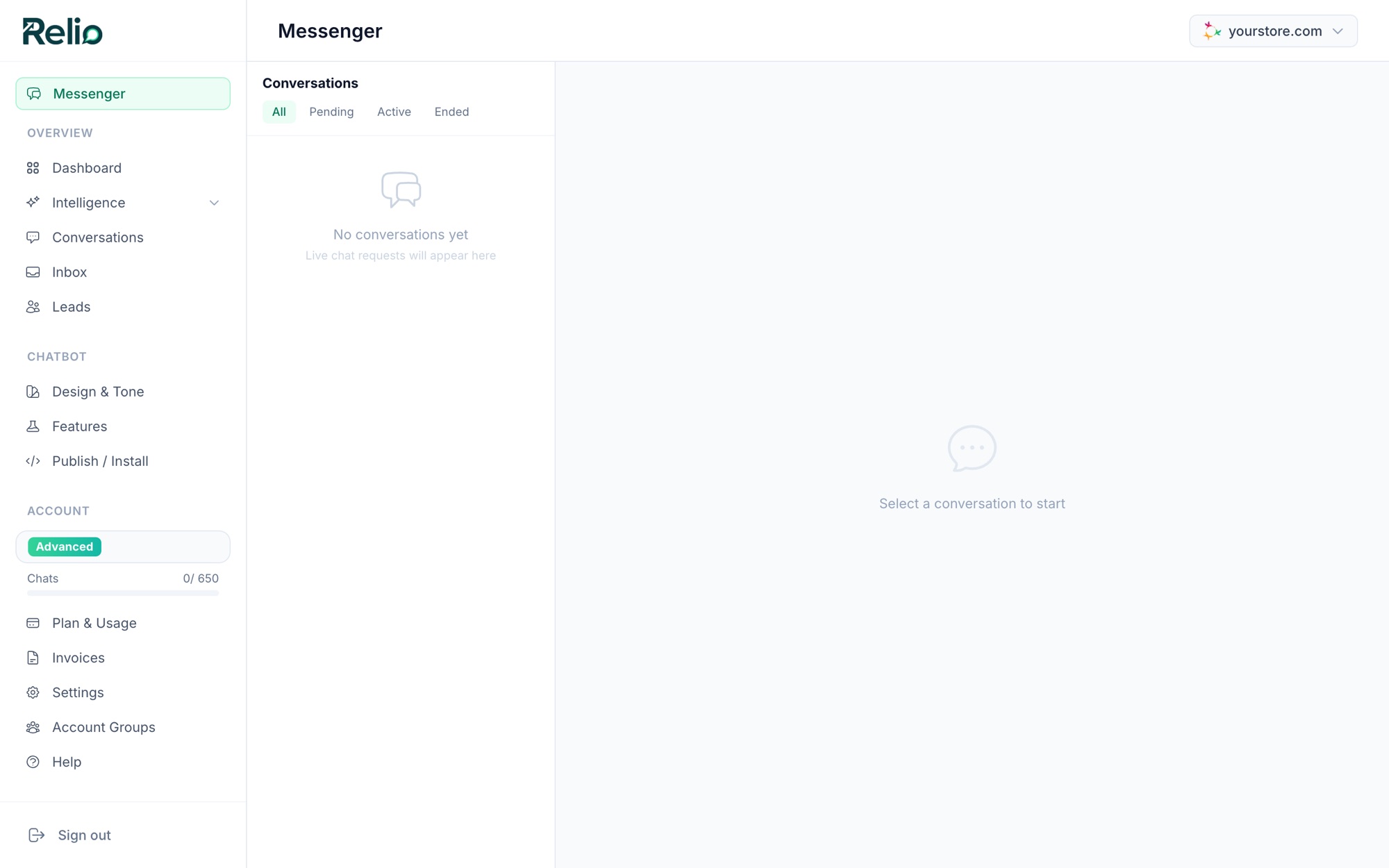
Choosing between Relio and Tidio depends on your store's focus. If increasing conversions is your priority, Relio is the perfect fit. This AI chat widget sits on your site and recommends products from your real catalog, helping visitors find what they need quickly. For instance, a visitor looking for "a gift for a mom who loves cooking" will see relevant product suggestions right away, driving more sales.
Tidio, on the other hand, excels at providing comprehensive support across channels. If your store needs to manage a high volume of customer inquiries from various platforms, Tidio's multi-channel capabilities are beneficial. It can handle emails, social media messages, and more in one place, ensuring no customer goes unattended.
Consider integrating both Relio and Tidio to cover all bases. Relio can focus on boosting sales through targeted product recommendations, while Tidio manages ongoing customer support. Both tools working together can amplify your store's effectiveness.
Explore the integration options to maximize these tools. By using them in tandem, you can provide a shopping experience that increases both conversions and customer satisfaction.
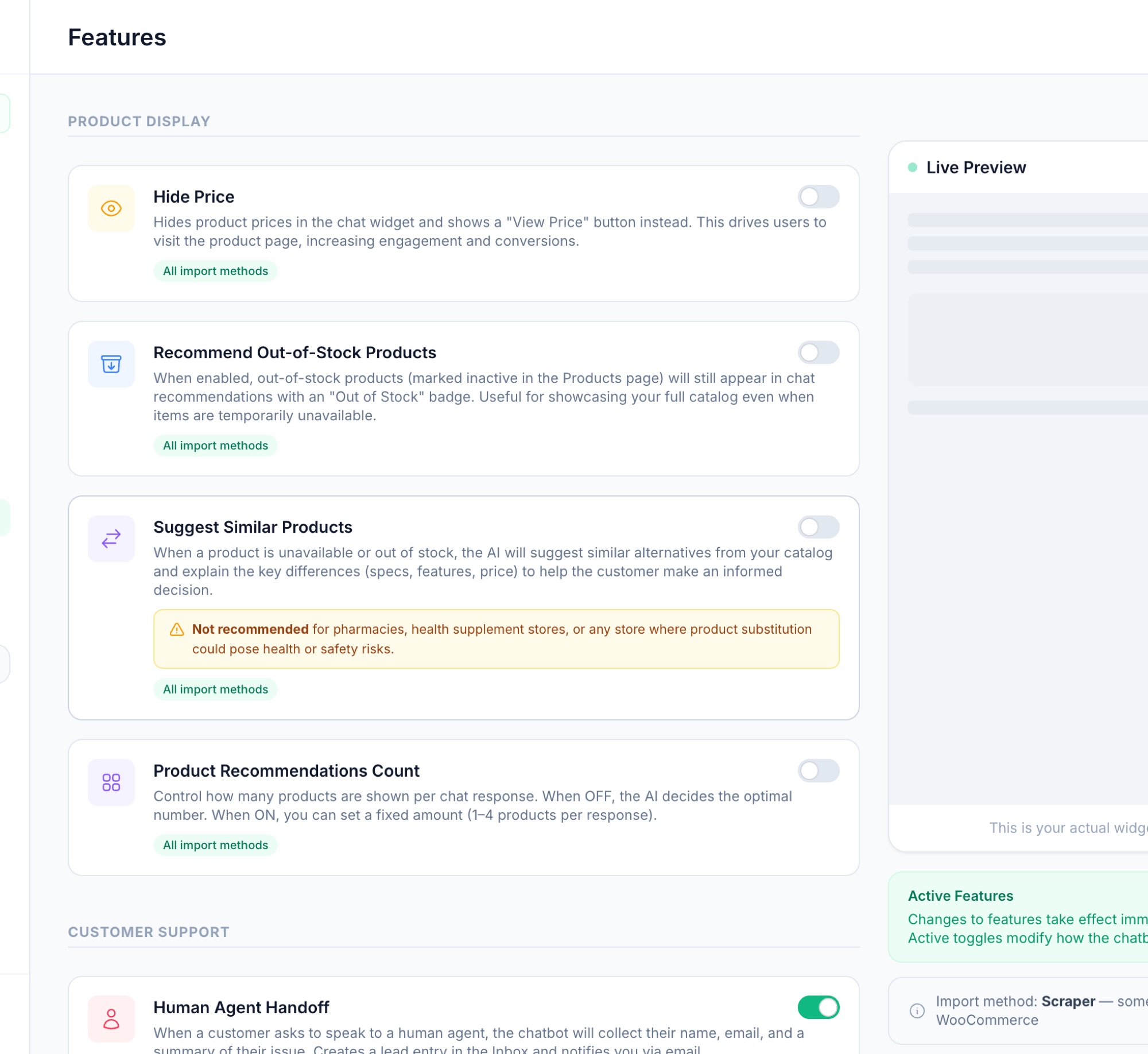
Combining Relio and Tidio can enhance your store's operations by dividing tasks efficiently. Use Relio as the conversion-driven engine on your site. It sits at the bottom-right corner, offering instant product recommendations through intelligent chat. For example, when a visitor says, "I need a gift for my cooking enthusiast friend," Relio suggests the best cookware from your catalog, helping to drive immediate conversions.
On the other hand, Tidio excels in managing support tickets and handling complex queries. As support requests come in, Tidio organizes them, ensuring your team can efficiently address customer concerns without overwhelming your chat widget's sales focus.
By clearly defining each tool's role, you improve workflow and customer satisfaction. Assess how integrating both aligns with your objectives, ensuring that each tool boosts specific aspects of your store's performance.
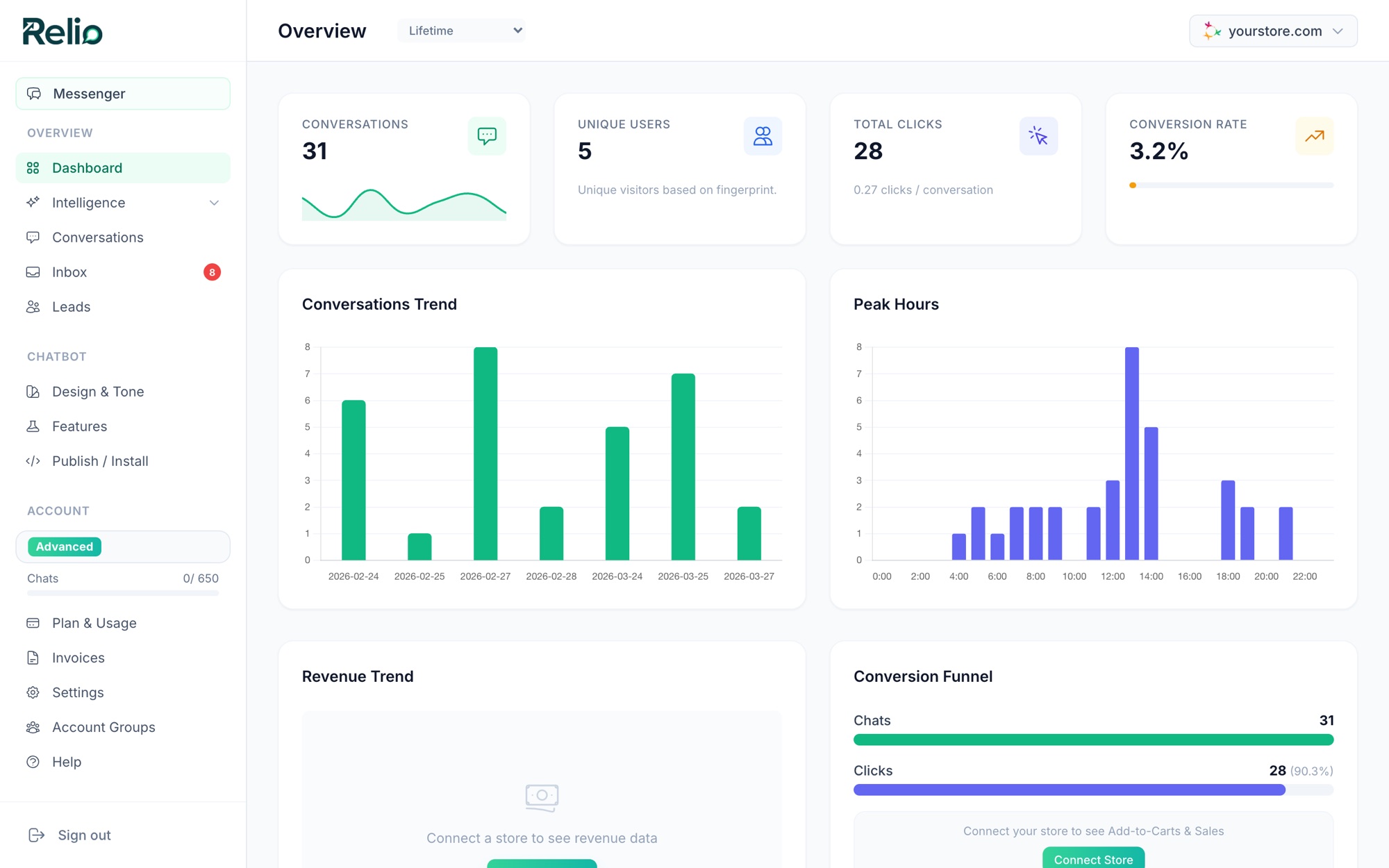
Understanding your sales journey is crucial for growth. Relio excels in sales attribution with direct, assisted, and session tracking. This detailed insight helps you see exactly how your chat interactions lead to sales. Imagine a visitor conversing with Relio about outdoor jackets. They add a product to their cart within the chat and complete the purchase. Relio tracks this as a direct sale, showing clear ROI.
On the other hand, Tidio is more oriented towards supporting customers rather than detailed revenue tracking. While it offers basic interaction metrics, it lacks the depth of Relio's three-tier tracking system. This difference means less granularity in understanding exactly which chats convert into sales.
Consider how each tool helps you gain insights into customer interactions. Relio provides:
These insights allow you to make data-driven decisions and refine your sales strategy effectively. With Relio, every chat counts, giving you the power to boost your store's performance based on real interactions.
As of September 2026. Public pricing pages; check the vendor for current details.
| Relio | Tidio | |
|---|---|---|
| Pricing | Flat plans | Usage-based |
| Free plan | Yes | Yes |
| Conversations included | 20-1,500/mo | 50-3,000/mo |
| Product limit | 500-60,000 | Focus on support, not catalog |
| Recommendations from catalog | Yes | Not core |
| Order management | Yes | Limited |
| Live chat / human handoff | Yes | Yes |
| Recommendation control (Owner Bias) | Yes | No |
| Sales attribution | Yes | No |
| Platforms | Any e-commerce | Multichannel support |

Discover how AI slashes costs vs. hiring staff in 2026. Explore solutions like Relio for e-commerce efficiency.

Explore effective alternatives to exit popups for increasing sales. Discover modern solutions like Relio for e-commerce success.

Discover 2026's AI vs human sales reps cost comparison for e-commerce. Learn why Relio leads in efficiency & savings.
Yes, both Relio and Tidio offer Free plans with different limitations.
Relio recommends products using AI, increasing conversions via catalog-driven insights.
Yes, use Relio for sales and Tidio for support. They complement each other well.
Relio offers AI-driven product recommendations, Owner Bias, and sales attribution tracking.
Product recommendations are not Tidio's core focus; it excels in support automation.
Relio tracks sales thoroughly with three-tier attribution; Tidio focuses more on support.
Explore Relio's Free plan and see how it boosts your store's conversion rate.
Start free