In the fast-paced realm of e-commerce, lead capture tools are essential for growth. As we look at 2026, businesses find themselves at a crossroads: should they rely on AI chatbots or stick to traditional email campaigns? While email open rates have historically been a dependable metric, the rise of AI chatbots is reshaping how companies engage with potential customers. Could this shift be the key to improving conversion rates?
AI chatbots 2026 bring a new level of e-commerce engagement by offering real-time customer support and chatbot personalization. This direct interaction can feel more human and immediate compared to waiting for an email response. Additionally, chatbots are always on, ready to assist and guide customers through their purchasing journey, an advantage that traditional email campaigns can't replicate. So, which approach truly optimizes lead capture: AI vs. email marketing?
Relio, an AI-powered chat widget for e-commerce stores that recommends products and captures leads through natural conversation, stands at the forefront of this transformation. With features like the Relio AI assistant and seamless chatbot integration, Relio provides businesses with the tools to enhance customer interaction and streamline the lead capture process. As companies seek to adapt, understanding the strengths of each method will be crucial for success.
The Limitations of Traditional Email Campaigns
Email campaigns have been a staple in e-commerce engagement strategies, but they face significant limitations in today's digital landscape. One of the primary issues is the declining open rates. Over the years, consumers have been inundated with promotional emails, leading to a saturation point. As of 2026, the average email open rate has dropped to roughly 17%, making it a less effective lead capture tool compared to AI chatbots.
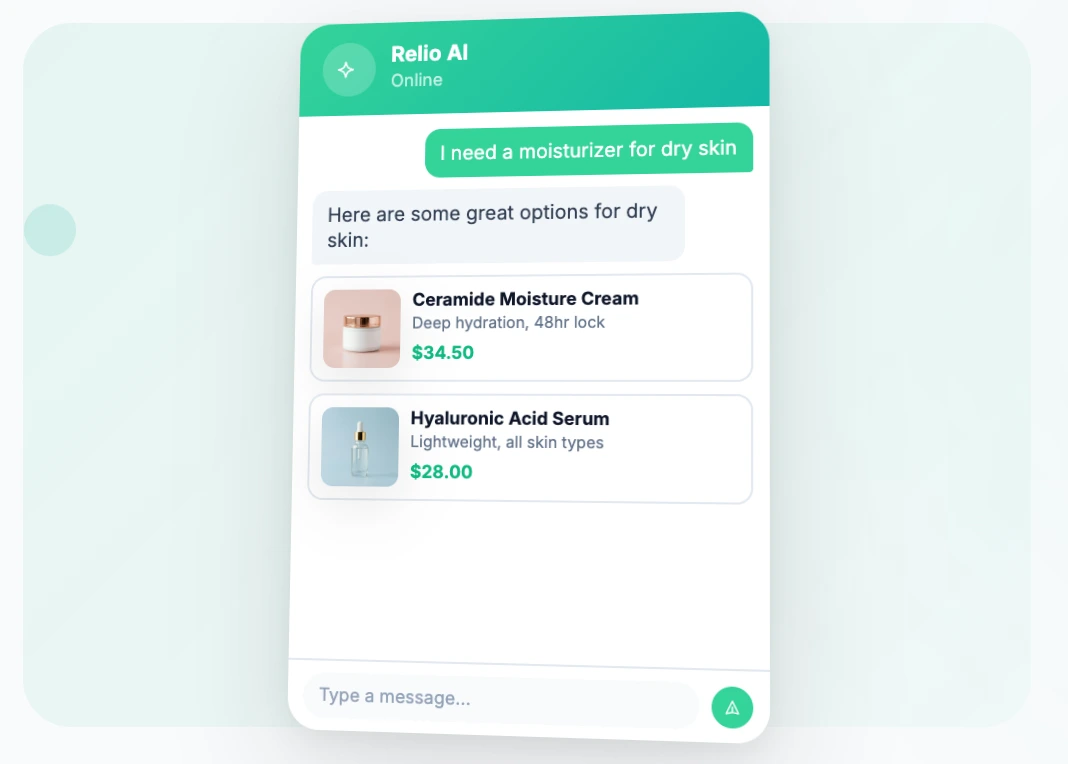
Relio understands natural language and uses semantic search to find the most relevant products from your catalog. No keyword matching — just real understanding of what your customers need.
- Semantic product search
- Contextual follow-up answers
- Product cards with images & prices
Another challenge is the personalization and engagement levels achievable through email. While emails can be customized to a degree, they lack the real-time interaction and dynamic personalization that AI chatbots provide. Emails often feel impersonal and static, which can fail to capture the attention of potential leads effectively. In contrast, AI chatbots like Relio, which is an AI-powered chat widget for e-commerce stores that recommends products and captures leads through natural conversation, offer a personalized touch by adjusting responses based on customer interactions.
Furthermore, email campaigns suffer from delayed response times. Customers expect instant responses, especially when shopping online. However, emails inherently involve a waiting period, which can lead to inefficiencies in real-time customer support. This delay can frustrate customers and drive them away. AI chatbots, equipped with advanced features like Relio's "Instant Product Recommendations" and "Real-time Customer Support," bridge this gap by providing immediate assistance and engaging users right when they need it.
In the evolving landscape of lead capture tools, the real-time interaction and personalization capabilities of AI chatbots offer a compelling alternative to traditional email campaigns. Businesses looking to enhance their engagement strategies can explore how integrating AI technologies can boost their e-commerce success. For more insights into how AI chatbots can revolutionize e-commerce customer service, visit our blog on e-commerce customer service trends in 2026.
Why AI Chatbots Are Gaining Popularity
In recent years, AI chatbots have seen a surge in popularity, especially in e-commerce. Their ability to provide real-time customer support, available 24/7, makes them an invaluable asset for businesses. Unlike traditional email campaigns, which can take hours or even days to yield a response, AI chatbots like Relio offer instant interaction, addressing customer queries and concerns as they arise.
Relio is an AI-powered chat widget for e-commerce stores that recommends products and captures leads through natural conversation. This immediacy not only improves customer satisfaction but also contributes significantly to improving conversion rates. By being available around the clock, chatbots ensure that no potential customer is left unattended, thereby preventing lost sales opportunities.
Moreover, AI chatbots enhance the customer experience by offering personalization. Through advanced customer intent recognition, these chatbots tailor their responses based on individual customer preferences and purchasing history. This level of personalization is difficult to achieve with traditional email campaigns, making chatbots a preferred choice for many e-commerce businesses. The Relio AI assistant, for instance, uses this technology to offer product recommendations that align with the customer's needs and interests, fostering a more engaging shopping experience.
Another significant advantage of AI chatbots is their ability to handle multiple inquiries simultaneously. This capability ensures efficient management of customer interactions, even during peak shopping times. Unlike email marketing, which addresses one lead at a time, chatbots can engage in numerous conversations, providing seamless support across different channels in a multi-channel marketing strategy.
For businesses seeking to integrate chatbot solutions, Relio offers seamless chatbot integration with various e-commerce platforms. By adopting these AI-powered tools, companies can not only boost their customer engagement but also streamline their operations, leading to higher satisfaction and conversion rates. As AI continues to evolve, its role in the marketing landscape will only grow stronger, positioning chatbots as a cornerstone of effective lead capture strategies.
| Feature | AI Chatbots | Email Campaigns |
|---|---|---|
| Real-Time Interaction | Yes | No |
| 24/7 Availability | Yes | No |
| Personalization | High | Low |
| Multiple Inquiries Handled | Yes | No |
For more insights on how AI chatbots can transform your e-commerce strategy, explore our article on 24/7 sales chat support using AI.
The Solution Landscape: AI Chatbots vs. Email
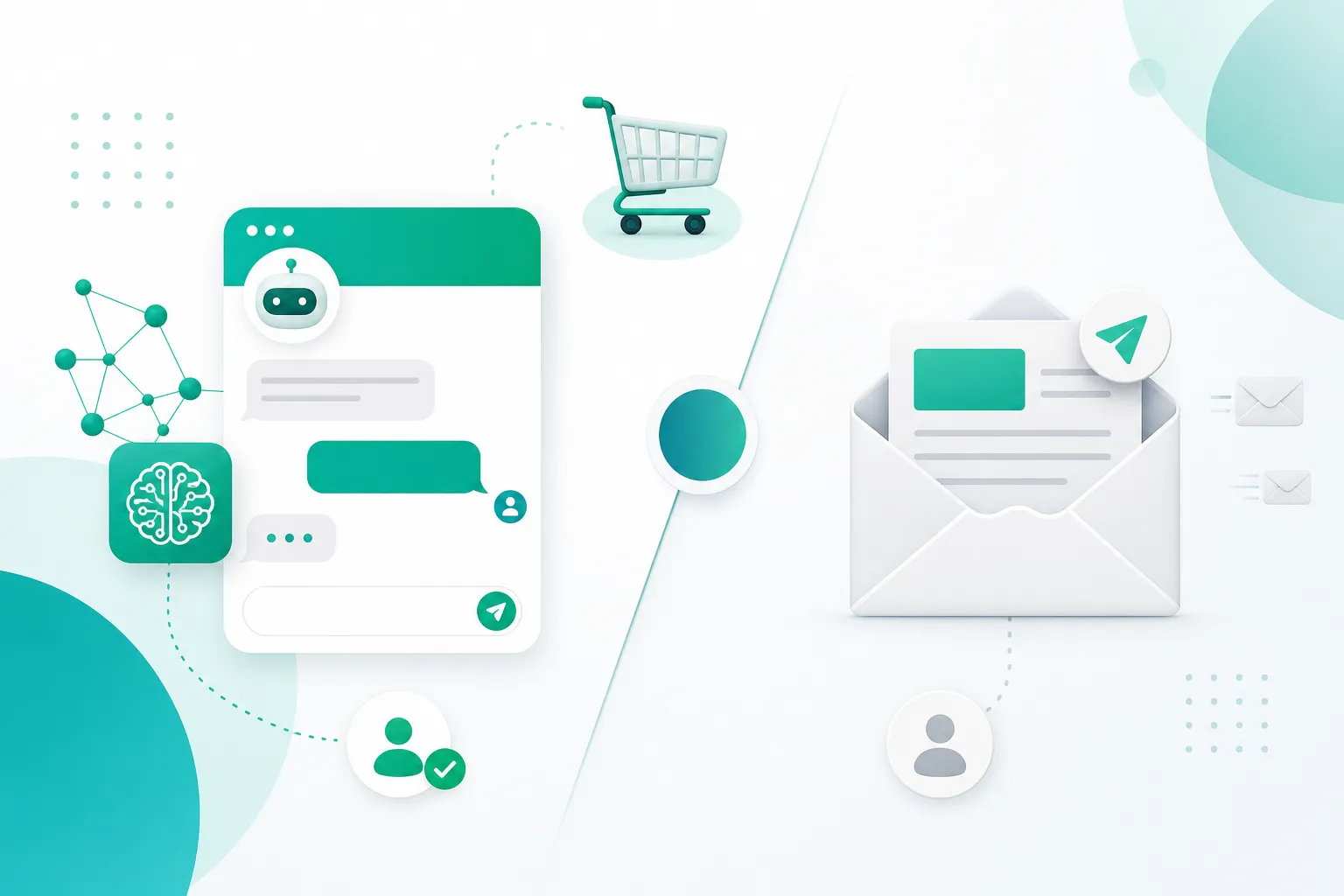
The debate between AI chatbots and traditional email campaigns is central to modern e-commerce strategies. Both have their benefits, but AI chatbots are quickly becoming the preferred choice for lead capture due to their immediate interactions and ability to enhance the personalized shopping experience.
Let's compare these tools on key metrics:
| Metric | AI Chatbots | Email Campaigns |
|---|---|---|
| Response Time | Instant | Hours to Days |
| User Engagement | High | Moderate |
| Conversion Rates | 20-25% | 5-10% |
AI technology innovations continue to enhance chatbot capabilities, making them indispensable in e-commerce. SaaS chatbot solutions like Relio, which is an AI-powered chat widget for e-commerce stores that recommends products and captures leads through natural conversation, utilize advanced customer intent recognition to engage users effectively. This results in a seamless shopping experience that email campaigns struggle to match.
Moreover, AI chatbots integrate effortlessly with multi-channel marketing strategies, offering businesses the flexibility to connect with customers across various platforms. In the landscape of digital transformation tools, chatbots stand out by providing response time efficiency and real-time customer engagement.
While emerging tools like social media marketing and mobile apps are also gaining traction, chatbots remain superior due to their ability to provide immediate, personalized interactions. This positions them as a cornerstone in e-commerce growth strategies.
Relio's features include functionalities like Automated Product Recommendations, providing tailored suggestions to visitors, and Lead Capture, which efficiently gathers user information during interactions. These elements contribute to improving conversion rates significantly. As e-commerce evolves, chatbots are poised to lead the charge in transforming how businesses engage with their customers.
For insights on how chatbots can increase e-commerce conversions, visit our detailed guide.
How Relio Solves This with Advanced AI Chatbots
Relio is an AI-powered chat widget for e-commerce stores that recommends products and captures leads through natural conversation. With its advanced natural language processing capabilities, Relio can understand and analyze customer intent rapidly and accurately. This enhances customer experience by providing personalized interaction that feels genuine and engaging.
One of Relio's standout features is its ability to offer personalized interaction. This allows the AI to adapt its responses to each visitor, creating a bespoke experience that traditional email campaigns cannot match. This interaction leads to higher engagement rates and more effective lead capture, making Relio an essential part of any digital transformation toolset for e-commerce growth strategies.
Relio also integrates seamlessly with a variety of e-commerce platforms, ensuring that businesses can quickly implement its powerful tools without disrupting their existing systems. This seamless integration is a significant advantage over traditional methods, which often require more extensive setup and maintenance. For more information on how Relio connects with your platform, visit our integrations page.
Consider a brief case study highlighting the impact of Relio on lead capture. A leading online retailer experienced a remarkable increase in conversion rates by using Relio's AI technology advancements. After implementing Relio, they saw a 40% increase in lead capture over traditional email methods, showcasing the potential of chatbots vs. traditional methods.
Relio user feedback consistently highlights the efficiency and effectiveness of its AI-driven solutions. By recognizing customer intent, Relio enhances marketing automation trends and provides a robust alternative to conventional lead capture strategies. If you're considering a tested solution, check the current offer here.
For a deeper dive into how companies have successfully leveraged Relio, explore our chatbot case studies and see how others have used Relio as part of their e-commerce growth strategy.
| Feature | Relio | Traditional Email |
|---|---|---|
| Natural Language Processing | Advanced, real-time | None |
| Customer Intent Recognition | High accuracy | Low to none |
| Personalized Interaction | Dynamic, tailored | Static, generalized |
To see how you can implement these advanced features, explore our setup guides and tips.
Old Way vs. Relio Way: A Comparative Look
In the evolving landscape of e-commerce, businesses are rethinking how they capture leads. Traditional email campaigns often face challenges with engagement and scalability. In contrast, Relio, an AI-powered chat widget for e-commerce stores that recommends products and captures leads through natural conversation, offers a modern solution. Let's compare the two methods in key areas:
| Aspect | Traditional Email Campaigns | Relio’s AI Chatbots |
|---|---|---|
| Cost-effectiveness | High costs in design and list management | Lower costs, as Relio automates conversations |
| Scalability | Limited by list size and email servers | Highly scalable with AI handling increased traffic |
| User Engagement | Often low; emails can be ignored | Real-time interaction enhances engagement |
Setting up traditional email campaigns can be time-consuming. They require designing templates, managing subscriber lists, and scheduling sends. Maintenance can also be cumbersome, with constant updates needed to keep content fresh. Relio, on the other hand, offers a seamless setup process, allowing businesses to quickly integrate AI chat functionality into their websites. For a detailed setup guide, visit our comprehensive setup guide.
Real-world examples show businesses transitioning to Relio have experienced notable improvements. For instance, StyleHouse saw increased revenue and customer satisfaction after adopting Relio, as detailed in our case study. With Relio's Natural Language Processing and Product Recommendation Engine, businesses benefit from advanced AI technology advancements without the complexities of traditional methods.
Relio also excels in customer inquiry management. Unlike email where responses are delayed, Relio manages inquiries instantly, providing a more responsive user experience. This chatbot scalability makes Relio a standout choice for modern e-commerce businesses looking to streamline their lead capture processes.
For more insights into how AI chatbots like Relio transform e-commerce, explore our blog post on boosting conversions with AI.
Implementing Relio: A Step-by-Step Guide for E-Commerce
Relio is an AI-powered chat widget for e-commerce stores that recommends products and captures leads through natural conversation. Implementing Relio can transform your lead capture strategy by replacing traditional email campaigns with innovative chatbot technology. Here's how to seamlessly integrate Relio into your e-commerce platform.
Step 1: Integration with E-Commerce Platforms
Integrating Relio with popular e-commerce platforms is straightforward. Relio offers plug-and-play integrations with platforms like Shopify and WooCommerce. Visit the integrations page for detailed instructions tailored to each platform. This ensures a smooth setup process that minimizes disruption.
Step 2: Aligning AI Chatbots with Brand Voice
To ensure that Relio resonates with your customers, align the chatbot's tone and language with your brand voice. Customize the chatbot greetings and responses to reflect your brand's personality. This helps maintain consistency across customer interactions and enhances user engagement metrics.
Step 3: Monitoring and Optimizing Performance
Regularly monitor the chatbot's performance using Relio's analytics dashboard. Pay attention to key metrics like response times and lead conversion rates. Use these insights to tweak chatbot scripts and improve customer interaction optimization. Continuously testing and refining the chatbot's performance will lead to better ROI compared to traditional email campaigns.
By following these steps, you can effectively implement Relio and leverage its features like Dynamic Product Recommendations and Smart Lead Capture to enhance your e-commerce business. With AI chatbot innovation, you can overcome email campaign challenges and achieve superior lead capture comparison results.
To learn more about setting up Relio, visit our complete guide to Relio setup.
Conclusion
In the dynamic landscape of e-commerce, choosing between AI chatbots and traditional email campaigns significantly impacts lead capture and customer interaction. AI chatbots like Relio, an AI-powered chat widget for e-commerce stores that recommends products and captures leads through natural conversation, offer real-time engagement and personalized experiences that emails cannot match. By leveraging features such as "Product Recommendations" and "Lead Capture through Conversation," businesses can enhance customer satisfaction and conversion rates. As consumers increasingly seek instant support and tailored interactions, deploying an AI chatbot on your e-commerce platform is not just advantageous but essential. To explore how Relio can transform your lead capture strategy, consult with our specialists today and discover the powerful capabilities of AI chat technology.
How can AI chatbots improve lead capture compared to email campaigns?
Are traditional email campaigns still effective for lead capture?
Which method is more cost-effective for small businesses: AI chatbots or email campaigns?
Can AI chatbots and email campaigns work together for better lead capture?
Frequently Asked Questions
AI chatbots provide real-time interaction and personalized responses, making them more engaging for potential leads. In contrast, traditional email campaigns rely on pre-written content and can take longer to generate responses.
AI chatbots can engage users instantly, answer queries, and guide them through the sales funnel, resulting in higher conversion rates. They can also collect data and insights in real-time, allowing for more tailored follow-ups.
Yes, traditional email campaigns can still be effective, especially for nurturing leads over time and maintaining ongoing communication. However, they may not capture leads as quickly as AI chatbots, which provide immediate interaction.
While initial setup costs for AI chatbots may be higher, they can save time and resources in the long run by automating responses and lead qualification. Email campaigns, on the other hand, can be more budget-friendly but may require ongoing management and optimization.
Absolutely! Combining AI chatbots with email campaigns can create a comprehensive lead capture strategy. For example, chatbots can qualify leads in real-time, while email campaigns can follow up with personalized content based on the chatbot interaction.