Live chat was once celebrated as the ultimate tool for enhancing e-commerce customer engagement, promising to transform casual visitors into loyal buyers. Yet, in 2026, many businesses find their live chat conversion rate disappointingly stagnant. How can a tool designed to boost online sales fall short of expectations?
The answer lies in the evolution of consumer expectations and the technology that supports them. Traditional live chat lacks the flexibility and intelligence required for modern e-commerce. Customers now expect personalized experiences and immediate solutions. Without the integration of AI-driven e-commerce solutions like smart customer support and AI sales assistants, live chat can become just another channel that fails to convert interest into purchases.
One promising alternative is the automation of customer interactions through AI-powered tools. Relio is an AI-powered chat widget for e-commerce stores that recommends products and captures leads through natural conversation. By offering personalization in e-commerce, Relio helps businesses enhance their sales conversion tools and improve live chat conversion rates. As e-commerce continues to evolve, integrating AI and automation becomes crucial for any brand seeking to stay ahead.
The Current State of Live Chat in E-Commerce
Live chat was once hailed as the future of e-commerce customer engagement, promising real-time interaction and improved customer satisfaction. However, the expected boost in sales conversions has not been fully realized. While live chat is widely adopted, with over 73% of customers expecting it on websites, the live chat conversion rate remains disappointingly low, averaging only 1-3% in many cases.
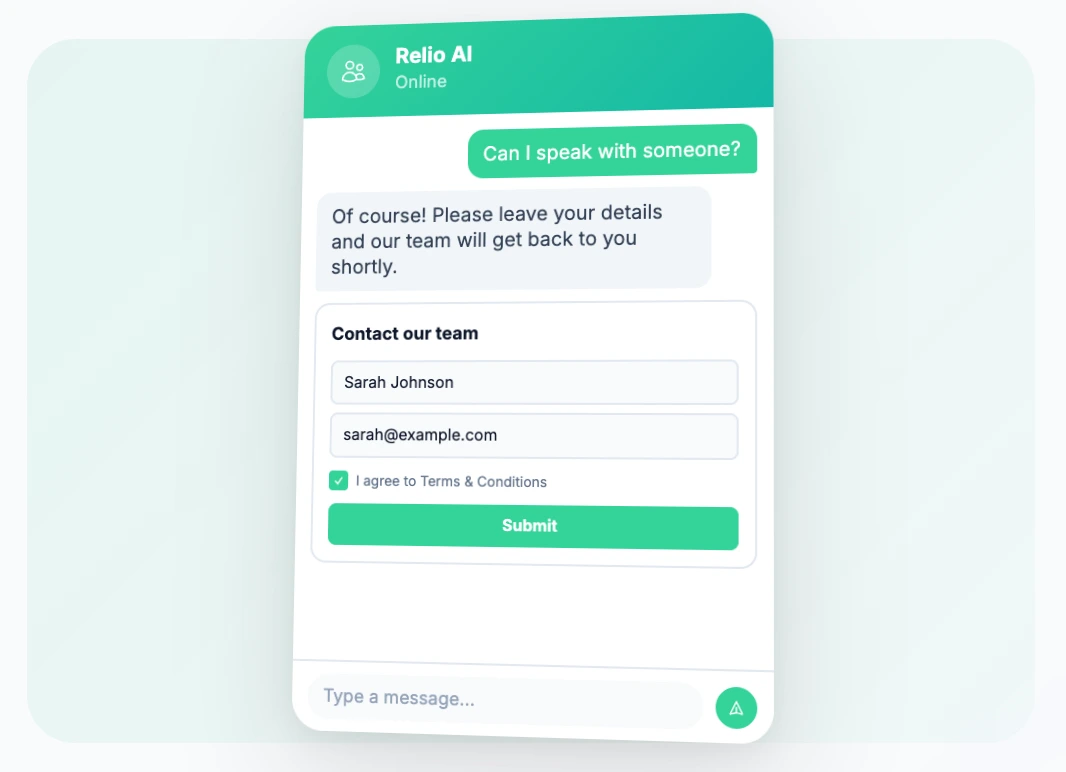
Automatically collect visitor information, capture leads from conversation flows, and seamlessly hand off to human agents when needed.
- Automatic email capture
- Full conversation transcripts
- Instant team notifications
Several factors contribute to this gap between expectation and reality. One of the most significant is response time delays. Customers are often left waiting for several minutes before receiving a response, leading to frustration and disengagement. Additionally, generic responses fail to provide the personalization in e-commerce that modern customers demand, which decreases the effectiveness of live chat as a smart customer support tool.
Another issue is the lack of integration with AI-driven e-commerce solutions. Many live chat systems still rely heavily on manual inputs, which limits their ability to provide the dynamic and personalized interactions that AI sales assistants can offer. As a result, businesses miss out on the opportunity to leverage AI for better sales conversion tools. For more insights on how to improve your store's conversion rates, check out this expert guide.
To address these challenges, e-commerce platforms are exploring live chat alternatives that incorporate AI technology. AI-driven systems can provide faster, more personalized responses, significantly boosting the potential for conversions. For example, Relio is an AI-powered chat widget for e-commerce stores that recommends products and captures leads through natural conversation. It offers features like Smart Product Recommendations, which analyzes customer data to suggest relevant products, and Automated Lead Capture, which efficiently gathers customer information for future engagement.
For more insights into how AI can transform e-commerce customer service, read our comprehensive guide on 2026 trends.
Identifying the Core Problems with Live Chat
Live chat was once hailed as a revolutionary sales conversion tool for e-commerce. However, it often fails to convert visitors into customers. The reasons are multifaceted and rooted in key operational shortcomings.
Firstly, live chat frequently lacks personalization. Many systems provide generic responses that don't address individual visitor needs. This decreases engagement and leaves potential buyers unsatisfied. In the era of AI-driven e-commerce solutions, personalization is crucial. Customers expect tailored experiences that traditional live chat systems struggle to deliver.
Another critical issue is inadequate data integration. Live chat platforms often operate in isolation. They don't seamlessly integrate with other systems to leverage real-time customer data. This disconnect can prevent sales teams from accessing valuable insights that could guide meaningful interactions. Without comprehensive data, it's challenging to offer the right product recommendations or address specific customer queries effectively.
Limited operational hours further exacerbate the problem. Many live chat services are unavailable outside of standard business hours. This limitation fails to meet the expectations of online shoppers who require assistance at all times. With global e-commerce, having a 24/7 presence is essential for boosting online sales.
Customer feedback highlights common pain points associated with live chat. Accompanying slow response times, unhelpful responses, and difficulties in navigating complex queries, such issues lead to frustration and abandoned carts, impacting conversion rates negatively.
Relio, an AI-powered chat widget for e-commerce stores, addresses these problems head-on. It offers features like AI Product Recommendations to deliver personalized suggestions based on user behavior. The 24/7 Automated Assistance ensures customers receive support anytime, reducing cart abandonment. Furthermore, Relio's Seamless Data Integration facilitates better customer interaction by utilizing real-time data insights.
For those seeking live chat alternatives, Relio's comprehensive solutions can be a game-changer. Learn more about how AI can boost your sales by visiting our features page.
Exploring Alternative Solutions for Enhanced Engagement
In the quest to boost sales conversions, e-commerce businesses are exploring various engagement tools beyond traditional live chat. Among these, AI-driven solutions are gaining traction for their ability to deliver personalized sales experiences and improve response times. These tools leverage real-time customer data to provide tailored recommendations, enhancing the overall shopping experience.
AI-driven alternatives, such as chat widgets and automated customer service platforms, offer significant advantages over standard live chat. They utilize advanced algorithms to predict customer needs and automate responses, which not only streamlines customer interactions but also reduces the need for extensive human intervention. This automation is particularly beneficial in handling repetitive inquiries, thus freeing up human agents to focus on more complex issues.
Live chat, while effective, often falls short in terms of scalability and personalization. AI-powered tools, on the other hand, can manage multiple conversations simultaneously and adapt their responses based on customer behavior. For businesses seeking conversion optimization tools, this means fewer missed opportunities and a smoother customer journey.
Relio is an AI-powered chat widget for e-commerce stores that recommends products and captures leads through natural conversation. It stands out in the AI-driven solution landscape by offering features like "Smart Product Recommendations" and "Lead Capture Automation," which are designed to enhance customer engagement and drive sales. By integrating Relio, businesses can utilize its ability to provide a personalized experience without the overhead of traditional customer service models.
For those interested in exploring how AI in e-commerce can transform customer interactions, integrating a solution like Relio could be a strategic move. To learn more about how Relio's features can enhance your e-commerce operations, visit our Features page.
Ultimately, choosing the right tools to enhance engagement requires understanding the unique needs of your business and customers. As AI technology continues to evolve, businesses that adapt will likely see improved conversion rates and customer satisfaction.
How Relio Solves This Problem
Relio is an AI-powered chat widget for e-commerce stores that recommends products and captures leads through natural conversation. When live chat isn't boosting sales conversions, Relio steps in with its AI-driven capabilities to offer a personalized sales experience that is both immediate and impactful. Unlike traditional live chat, Relio leverages AI in e-commerce to understand customer intent better, giving tailored product recommendations that resonate with shoppers.
One of Relio's standout features is its real-time data integration. This allows the AI to access and utilize up-to-date information from your e-commerce platform, enhancing its ability to offer relevant suggestions and solutions, effectively acting as a conversion optimization tool. By pulling in data on inventory, customer behavior, and past interactions, Relio crafts a data-driven sales strategy that improves the user experience significantly.
Moreover, Relio offers 24/7 customer support, ensuring that no sales opportunity is missed, regardless of the time zone differences or late-night shopping habits. This round-the-clock availability is crucial in an increasingly global market and gives e-commerce platforms a competitive edge over those relying solely on human agents. The difference between live chat and AI chat becomes evident here, as Relio can handle inquiries and sales prompts without the need for breaks or staffing costs.
Businesses using Relio have observed notable improvements in conversion rates. For example, by integrating Relio's AI into their sales funnel, some e-commerce platforms have seen a substantial increase in customer interactions leading to purchases. This AI tool not only enhances the customer journey but also directly contributes to increased revenue.
For those interested in exploring how Relio can transform their e-commerce operations, check the current offer here. Additionally, more insights on achieving cost-effective 24/7 sales support can be found at this guide. With Relio, businesses can seamlessly enhance their e-commerce platforms and optimize their conversion rates.
Old Way vs. Relio Way: A Comparative Analysis
In the fast-paced world of e-commerce, live chat has long been a staple for customer interaction. However, traditional live chat platforms often fall short in converting visitors into buyers. Enter Relio, an AI-powered chat widget for e-commerce stores that recommends products and captures leads through natural conversation. Let's explore how the Relio way offers a transformative approach compared to the old live chat methods.
| Aspect | Live Chat | Relio |
|---|---|---|
| Response Times | Variable, often delayed during peak hours | Instant 24/7 customer support with AI-driven responses |
| Personalization | Limited, relies on manual input from chat agents | Highly personalized interactions using customer data and behavior analysis |
| Conversion Rates | Moderate, with significant drop-offs during busy periods | Optimized for higher conversion rates through tailored product recommendations |
The key difference lies in how Relio enhances e-commerce platforms by providing real-time engagement solutions. While traditional live chat performance can be hampered by human limitations, Relio's AI assistant ensures consistent, high-quality interactions. This includes immediate responses and the ability to handle multiple queries simultaneously, which is essential for future of customer service.
A seamless experience is one of Relio's standout features. The "Product Recommendation Engine" leverages past purchase data and browsing history to suggest relevant products, thereby increasing the likelihood of conversion. Additionally, Relio's "Lead Capture Automation" efficiently gathers customer information without disrupting the shopping experience.
Consider the following chat simulation to see Relio in action:
For e-commerce businesses looking to boost their sales conversion strategies, adopting innovative e-commerce tools like Relio is a game changer. It bridges the gap between customer inquiry and purchase decision, offering a seamless and effective customer journey. For more on how AI can transform your e-commerce success, visit our detailed guide.
Implementing Relio for Maximum Impact
Relio is an AI-powered chat widget for e-commerce stores that recommends products and captures leads through natural conversation. To overcome common live chat challenges and optimize online conversions, integrating Relio effectively into your e-commerce platform is crucial. Follow these steps for a seamless setup and customization experience.
Step-by-Step Integration Guide:
- Step 1: Visit the Relio Integrations page to check compatibility with your e-commerce platform.
- Step 2: Follow the detailed instructions to install the Relio widget on your site. This process typically involves adding a snippet of code to your website's header.
- Step 3: Configure your settings within the Relio dashboard. Here, you can tailor the widget's appearance and functionality to fit your brand.
- Step 4: Test the chat widget to ensure it operates smoothly and aligns with your website's user experience.
Customizing Relio for Your Business Needs:
Relio provides various features that can be customized to align with your sales conversion strategies. Use the Dynamic Product Recommendations feature to suggest products based on visitor behavior. Additionally, the Lead Capture capability helps in collecting visitor information seamlessly through conversations. Tailor these features to meet specific business goals, from increasing average order value to enhancing real-time engagement solutions.
Example of Successful Implementation:
Consider the case of an online fashion retailer that effectively leveraged Relio's AI customer assistance. By utilizing the Automated Cart Recovery feature, they addressed abandoned cart issues, significantly boosting their conversion rates. The AI chatbots for sales provided timely reminders and personalized offers to hesitant buyers, leading to a remarkable improvement in sales.
Implementing Relio can transform your e-commerce experience from passive browsing to proactive engagement. For more detailed guidance, check out our Complete Guide to Relio Setup.
CTA:
Conclusion
In summary, live chat can transform sales conversions when executed correctly. Many e-commerce platforms struggle with generic chat solutions that fail to engage visitors effectively. The key lies in leveraging AI-powered tools like Relio, which can enhance customer interactions through personalized recommendations and lead capture. Relio's "Product Recommendation Engine" and "Lead Capture Automation" features are specifically designed to drive meaningful conversations that lead to sales. By understanding visitor needs in real-time, e-commerce stores can build trust and convert interest into purchases. To truly harness the power of live chat, consider consulting an AI specialist or discovering products like Relio that are tailored for e-commerce success.
Live chat may not be increasing your sales conversions due to a lack of effective engagement strategies. If the chat representatives are not trained to handle inquiries effectively or if responses are slow, potential customers may leave without making a purchase. Absolutely. If your website is difficult to navigate or the live chat feature is hard to find, customers may not utilize it. A seamless user experience is crucial for encouraging interactions that lead to conversions. Yes, timing is critical. If live chat pops up too soon or too late during a customer's journey, it can be intrusive or irrelevant, leading to missed opportunities for engagement and conversion. To improve effectiveness, ensure your chat team is well-trained and knowledgeable about your products. Additionally, using proactive chat invitations based on user behavior can help engage visitors at the right moment. Definitely. High-quality, personalized responses that address customer queries and concerns can significantly influence their purchasing decisions. If the chat feels generic or unhelpful, it may deter potential buyers.Could poor website design affect live chat performance?
Is the timing of live chat interactions important for sales?
How can I improve the effectiveness of my live chat?
Does the quality of chat responses impact sales?
Frequently Asked Questions