As a small e-commerce store owner, you might find yourself contemplating the cost-effectiveness of using an AI chatbot versus hiring a live agent for customer support. In 2026, with customer service costs soaring and budgets tightening, making the right choice is crucial. Did you know that the average live agent salary can consume a substantial portion of a small store's budget? In contrast, AI chatbots often promise lower operational costs and round-the-clock service.
AI vs human agents is a debate that continues to intrigue many in the e-commerce sector. While chatbots can handle high volumes of inquiries with remarkable chatbot efficiency, live agents bring a personal touch that some customers still prefer. This balance between cost and customer satisfaction is at the heart of choosing the right support system for your business. Relio is an AI-powered chat widget for e-commerce stores that recommends products and captures leads through natural conversation, offering a unique solution for cost-effective customer support.
Integrating AI into your e-commerce platform can redefine your customer service strategy. With advanced AI integration for e-commerce, solutions like Relio provide a scalable and flexible option. As we delve deeper into the numbers, the question arises: can an AI chatbot like Relio not only match but surpass the live agent benefits for small stores without breaking the bank? This article explores these considerations to guide you in making an informed decision.
Understanding the Cost Implications for Small Stores
For small e-commerce stores, managing customer service costs is a crucial aspect of staying competitive. Hiring live agents often comes with significant expenses. The typical cost structure includes salaries, benefits, and ongoing training. On average, a customer service representative's salary can range from $30,000 to $50,000 annually, depending on experience and location. Additionally, benefits such as health insurance and retirement contributions add to these costs.
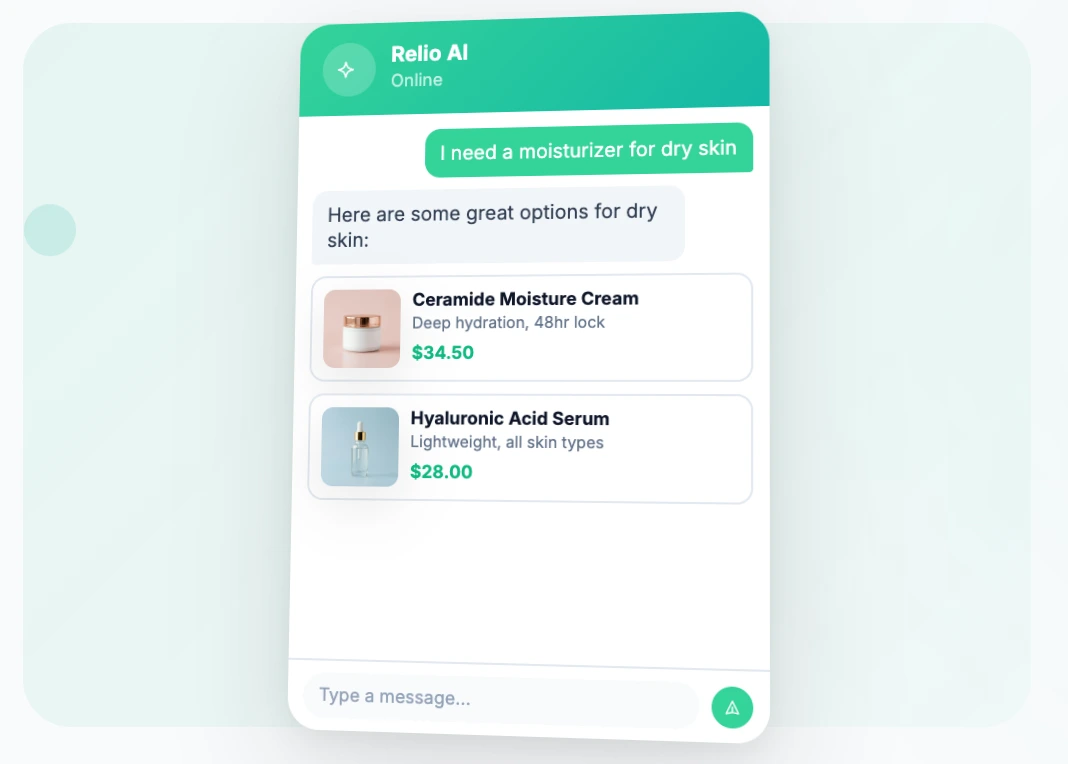
Relio understands natural language and uses semantic search to find the most relevant products from your catalog. No keyword matching — just real understanding of what your customers need.
- Semantic product search
- Contextual follow-up answers
- Product cards with images & prices
Training is another vital component. It's not just a one-time expense; regular updates and skill development sessions are necessary to ensure agents stay effective. This commitment can strain a small e-commerce store's budget that might already be tight.
In contrast, AI chatbots offer a different cost structure. The AI chatbot cost primarily involves subscription fees, maintenance, and updates. For instance, a subscription to an AI-powered chat service like Relio involves a fixed monthly or yearly fee. This cost typically includes software maintenance and updates, ensuring that the chatbot remains efficient and up-to-date with the latest e-commerce trends. Unlike live agents, AI chatbots do not require salaries or benefits, making them a more scalable option.
Small e-commerce stores often operate under significant budget constraints. Allocating funds wisely between AI integration for e-commerce and human resources is a constant challenge. While live agents provide personalized service with a human touch, the efficiency of AI chatbots in handling repetitive queries can not be overlooked.
Relio is an AI-powered chat widget for e-commerce stores that recommends products and captures leads through natural conversation. It offers features like AI-Powered Product Recommendation, which can enhance customer engagement without the overhead of a live agent salary. For more insights on how AI chatbots can transform small store operations, visit our blog.
| Cost Aspect | Live Agent | AI Chatbot |
|---|---|---|
| Salary/Subscription | $30,000 - $50,000/year | Fixed monthly/yearly fee |
| Benefits | Health, retirement, etc. | None |
| Training/Maintenance | Ongoing | Included in subscription |
Ultimately, choosing between AI vs human agents depends on the specific needs and budget of the e-commerce store. Exploring the features and efficiencies of both options can help store owners make informed decisions.
The Impact on Customer Experience
In the realm of e-commerce, the speed and availability of customer support can significantly shape the shopping experience. Customers expect immediate responses to their inquiries, which AI chatbots excel at providing. Unlike live agents, AI-powered solutions like the Relio AI chatbot are available 24/7, ensuring that customer queries are handled promptly, even outside regular business hours. This constant availability can greatly enhance e-commerce customer satisfaction, as it reduces wait times and provides instant support.
However, each method has its limitations. Live agents bring a personal touch to interactions and can handle complex queries that require human judgment. Yet, they are limited by working hours and can only manage a finite number of conversations at a time. On the other hand, AI chatbots offer cost-effective customer support and can manage multiple interactions simultaneously. Nevertheless, they may struggle with complex or nuanced inquiries that require empathy or advanced problem-solving skills.
Statistics from 2026 reveal a shift in customer preferences. A survey found that 68% of customers prefer using a chatbot for simple questions due to chatbot efficiency, while 32% still value the live agent benefits for more intricate issues. This indicates a growing acceptance of AI integration for e-commerce as a viable support channel.
Relio, an AI-powered chat widget for e-commerce stores, offers features like "Product Recommendations" and "Lead Capture" to further enhance customer interactions. By seamlessly integrating into e-commerce platforms, it ensures an efficient and pleasant shopping experience. For more insights on how AI is transforming customer service, visit our e-commerce customer service trends article.
Understanding the balance between AI chatbot subscription costs and hiring live agents is crucial for small stores. Finding the right mix can lead to high e-commerce customer satisfaction while being mindful of budget constraints.
The Growing Landscape of AI Solutions
The landscape of AI solutions for e-commerce is evolving rapidly. Small stores now have access to a variety of AI-powered tools that can significantly enhance customer interactions. These tools include AI chatbots that automate customer service, reducing the need for hiring live agents. For businesses aiming to improve e-commerce customer satisfaction, choosing the right AI chatbot can be a game-changer.
Relio is an AI-powered chat widget for e-commerce stores that recommends products and captures leads through natural conversation. It stands out in the crowded market due to its unique features that cater specifically to the needs of e-commerce businesses. When comparing Relio to other AI solutions, one key advantage is its ability to handle automated customer interaction seamlessly. This reduces the time and cost associated with live agent availability and maintenance.
Several factors set Relio apart from its competitors:
- Product Recommendations: Relio's AI-driven product suggestion feature tailors recommendations based on visitor behavior, enhancing the shopping experience.
- Lead Capture: Relio efficiently captures leads through engaging conversation, boosting potential sales opportunities.
- Seamless Integration: Designed to integrate with major e-commerce platforms, Relio ensures smooth operation without disrupting the existing business processes.
In contrast, other AI chatbots may require more intensive AI chatbot maintenance and lack the specialized features that Relio offers. This makes Relio not only a cost-effective solution but also a superior choice in terms of enhancing e-commerce customer satisfaction.
For small stores, an AI chatbot subscription can be a cost-effective alternative to hiring live agents. Relio offers scalable solutions that adapt to business growth, making it a preferred choice compared to competitors. To explore Relio's full range of features, visit the features page.
As the AI landscape continues to grow, choosing the right solution is crucial. Relio provides a comprehensive, user-friendly platform that supports small e-commerce stores in enhancing their customer service capabilities.
How Relio Solves This
Relio is an AI-powered chat widget for e-commerce stores that recommends products and captures leads through natural conversation. For small store owners looking to reduce costs, Relio offers a compelling alternative to live agents. Key features like seamless integration, 24/7 availability, and personalized interactions make it a perfect fit for small businesses aiming to optimize customer service while managing expenses.
One of the standout advantages of Relio is its cost-effectiveness. Unlike live agents who require training and constant supervision, Relio operates without the ongoing costs of salaries and benefits. This becomes increasingly important in the context of AI chatbot market growth, as more small stores adopt automated customer interaction to stay competitive.
Relio's seamless integration allows small businesses to incorporate the chat widget into their existing systems without hassle. This means that small stores can quickly deploy Relio and start benefiting from its efficient chatbot response time. Moreover, Relio's AI chatbot maintenance is straightforward, reducing the need for technical expertise and allowing store owners to focus on other areas of their business.
Testimonials from small store owners highlight Relio's impact. Many report significant savings and improved customer satisfaction. For example, a store owner mentioned how Relio's personalized customer interaction helped retain customers who would otherwise have gone unnoticed. The 24/7 availability of Relio means that small stores never miss an opportunity to engage with customers, further enhancing their service capabilities.
For those considering a tested solution, check the current offer here. To learn more about Relio's features, visit the features page.
Relio stands out not just for its affordability but also for its ability to provide the kind of automated customer interaction that aligns with 2026 e-commerce trends. Small stores can rely on Relio to handle customer queries efficiently without the overhead of live agent training.
Old Way vs. Relio Way: A Side-by-Side Comparison
In the evolving landscape of 2026 e-commerce trends, small stores are increasingly integrating AI customer service solutions to optimize costs and enhance customer satisfaction. Traditional live agents, though effective in personalized customer interaction, often carry significant overhead. In contrast, Relio, an AI-powered chat widget for e-commerce stores that recommends products and captures leads through natural conversation, offers a scalable and cost-efficient alternative.
| Aspect | Live Agent | Relio |
|---|---|---|
| Setup Costs | Typically $500-$1,000 for recruitment and training | Minimal setup fees; quick integration with e-commerce platforms |
| Ongoing Costs | $3,000-$4,000/month per agent (salary, benefits) | Flexible monthly plans; much lower operational costs |
| Response Times | Average 2-5 minutes | Instantaneous response with AI-driven efficiency |
| Resolution Rates | Dependent on agent expertise | High resolution rates with AI learning from user interactions |
Relio's AI capabilities allow for instantaneous responses, significantly reducing wait times compared to live agents. As AI chatbot market growth continues, Relio stands out by integrating seamlessly with small stores, as highlighted in our blog on AI chatbots and e-commerce conversions. This integration not only improves resolution rates but also ensures consistent service quality, a common challenge with human agents.
Customer satisfaction is a critical metric where Relio excels. Relio user reviews often point to the AI's ability to maintain high engagement levels by providing personalized responses. This aligns with 2026 e-commerce trends where customers value quick and accurate solutions. Additionally, Relio offers features like the Lead Capture Automation, which seamlessly captures potential customer information, and Product Recommendation Engine, enhancing the shopping experience by suggesting relevant products.
For small businesses, the benefits of AI in reducing costs and boosting customer satisfaction are clear. While live agents offer a personal touch, Relio's AI-driven approach provides a compelling, scalable alternative that aligns with current market demands.
Explore how Relio integrates with your e-commerce platform.Implementing AI Chatbots in Your Store with Relio
Relio is an AI-powered chat widget for e-commerce stores that recommends products and captures leads through natural conversation. Implementing this AI customer service solution is straightforward and offers numerous benefits for small businesses. Here's a step-by-step guide to integrating Relio into your e-commerce platform, along with tips to optimize its features and measure success effectively.
Step-by-step Integration Guide:
- Visit the Relio integrations page to ensure compatibility with your e-commerce platform.
- Sign up for a Relio account. Follow the on-screen instructions to set up your store profile.
- Access the Relio dashboard and use the provided code to embed the chat widget on your website.
- Customize the chat widget's appearance to match your brand colors and style.
- Configure the welcome messages and automated responses using Relio's AI Chat Flow Designer.
- Test the chat widget to ensure it's functioning correctly on your site.
Optimizing Relio's Features:
To enhance customer interaction, utilize Relio's Product Recommendation Engine to suggest relevant products to visitors. Engage customers by setting up personalized messages based on browsing behavior. Regularly update FAQs and common queries in the AI Customer Query Handling module to provide accurate and timely responses.
Measuring Success:
Track the performance of your AI chat widget using metrics such as response time, customer satisfaction scores, and conversation completion rates. Use these insights to make data-driven improvements. For privacy concerns, review Relio's AI chatbot privacy policies to ensure compliance and customer trust.
By implementing Relio, small businesses can optimize customer service and reduce costs associated with live agents. Explore more on how AI benefits small businesses in our detailed guide.
| Feature | AI Chatbot | Live Agent |
|---|---|---|
| Availability | 24/7 | Limited to business hours |
| Cost | Fixed subscription | Variable, based on hours |
| Scalability | High | Moderate |
CTA Headline: Revolutionize Your Customer Service Today
CTA Text: Discover how Relio's AI-powered solutions can transform your e-commerce experience. Start optimizing customer interactions for better sales and satisfaction. Explore Relio's features now.
Conclusion
For small e-commerce stores, balancing cost and customer service quality is essential. AI chatbots, like Relio, offer a cost-effective solution by providing 24/7 service and handling multiple inquiries simultaneously. Relio is an AI-powered chat widget for e-commerce stores that recommends products and captures leads through natural conversation. While live agents bring a human touch, they often come with higher costs and limited availability. By leveraging tools like Relio, businesses can automate routine queries and free up human agents for complex interactions, optimizing both efficiency and expenses. Explore the potential of AI chatbots to enhance your store's customer service strategy.
Ready to transform your customer service? Consult our specialists to discover how Relio can meet your needs.
Are there any hidden costs associated with using AI chatbots?
How does the cost of training live agents compare to implementing AI chatbots?
Can small stores save money by using a combination of AI chatbots and live agents?
What factors should small stores consider when choosing between AI chatbots and live agents?
Frequently Asked Questions
AI chatbots typically have lower upfront and ongoing costs compared to live agents. While chatbots may require an initial investment in technology, they can handle multiple inquiries simultaneously without additional costs, making them a cost-effective solution for small stores.
Yes, there can be hidden costs such as software integration, maintenance, and updates. Additionally, if the chatbot requires advanced features or customizations, these can lead to increased expenses over time.
Training live agents can be significantly more expensive due to the time and resources needed for onboarding and ongoing education. In contrast, AI chatbots can be programmed and updated more swiftly, reducing the training costs associated with human agents.
Absolutely! A hybrid approach allows small stores to handle routine inquiries with chatbots while reserving live agents for more complex issues, optimizing operational efficiency and reducing overall costs. This strategy ensures that customer needs are met without overspending on staffing.
Small stores should consider factors such as the volume of customer inquiries, the complexity of questions, and budget constraints. Additionally, evaluating customer preferences for interaction can help in deciding whether to invest in AI chatbots, live agents, or a combination of both.